
By the time this post goes live, I will probably be on my way to hiking Machu Picchu in Peru. I genuinely cannot believe I just typed that. It has been on my bucket list for two years now, and it is finally happening.
It is September 30th and I am feeling every bit of the energy that comes with the last quarter of the year. For me, that always means reviewing my goals and figuring out how to structure what is left into the final stretch. I looked at my list and realised I was behind on my personal goals. The fitness has been consistent, the reading has been consistent, and I have been learning new things throughout the year. But Peru was still on the list. Advanced Scuba Diving was still on the list. Photography was still on the list.
With photography, I have picked up bits and pieces along the way but have not properly committed to it yet. One of the promises I made to myself was that I would not go to Peru until I had enough skill to photograph the Amazon. That is still the goal, and I am still excited about it. While I work out how to justify the cost of the camera I actually want, I have decided to rent one and take it for a proper spin first. I have wanted to learn professional photography for a while, mainly to document my travels, and given how often I am moving around, it is a complete no-brainer. If I can build that skill properly, it would be genuinely synergistic with everything else I already have going on. So Peru, here I come. If this goes well, Antarctica might be next. Fingers crossed.
On the Scuba front, I had originally planned to go to Victoria to do the Advanced Dive course with my actual instructor, but when I looked at the cost of flights and logistics, I let that plan go. I will be combining it with the Peru trip instead. I am coming back one hell of a fit barbie. Anyway, more on all of that once I am back.
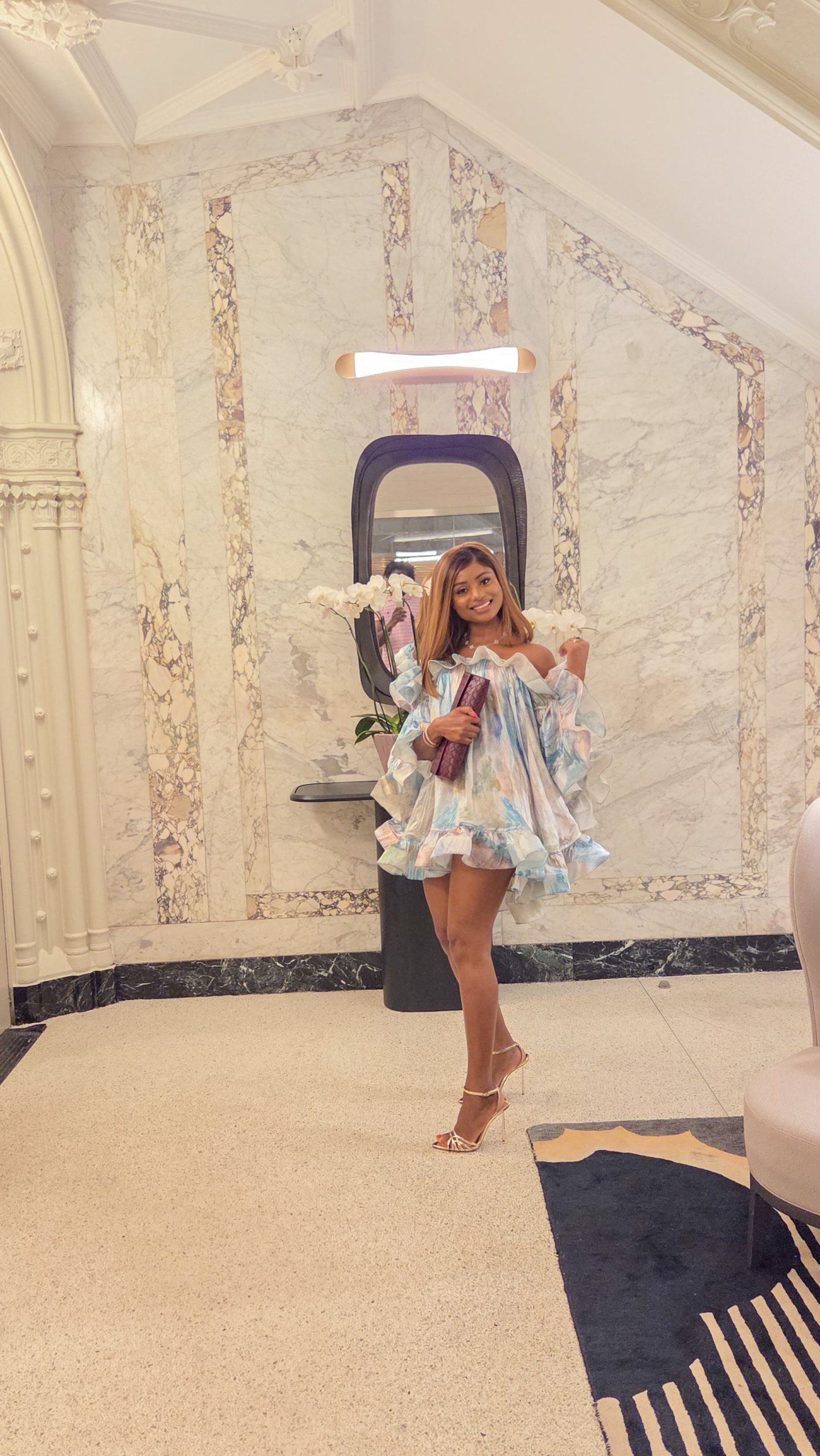
Summer this year went quickly, but in the best possible way. I think I had more fun than usual and completely missed the mark on reading, which I am making peace with.
What marked the end of summer for me was visiting my dad in Boston for his birthday. Given how close we have been in proximity, it is embarrassing that I had not seen him in two years. He is in excellent health (Thank God) and has not aged a single day, which I will take as a sign that I have good genes ahead of me.
I had repeatedly asked him what he wanted to do to celebrate and got his classic response, nothing! But I did not want it to be just another day for him, so I planned a dinner with his friends at a nice upscale restaurant where we could banter and bicker through the night. He was genuinely happy in a way I had not seen in a while. People gave speeches, and my dad told a story that really touched my heart. Someone had asked him if there was one thing he would never support, and he answered "jungle justice" before going into the story. I will not share the details here because I am not sure he intended it to be public, but the one thing it reminded me of is how much luck plays a role in all of our lives. It was a beautiful night. My dad even had a drink, which tells you exactly how relaxed and at ease he felt. He had not had a drink in years.
Then books found me, I had a few borrowed books I simply could not get into, and I figured the problem was the recommendation. Then one afternoon I was scrolling through Instagram and someone on my feed was sharing book suggestions. Two titles caught my eye immediately "Almond and Strangers"
Both are novels, and one is a memoir. If you know anything about me, these are not the genres I naturally gravitate toward. Even when I do read fiction, it tends to be a leisurely beach read rather than something I seek out deliberately. But I have been leaning into change lately in a lot of ways, and something about these two called to me.
Speaking of change, I have added another colour to my nail polish rotation. It is no longer all red, all the time. I also swapped the gym for a six-day-a-week routine covering yoga, Pilates, kickboxing, functional fitness, and strength and conditioning. I have been rearranging a lot of things that I would not normally move, and I am genuinely detoxing in almost every form, including people.
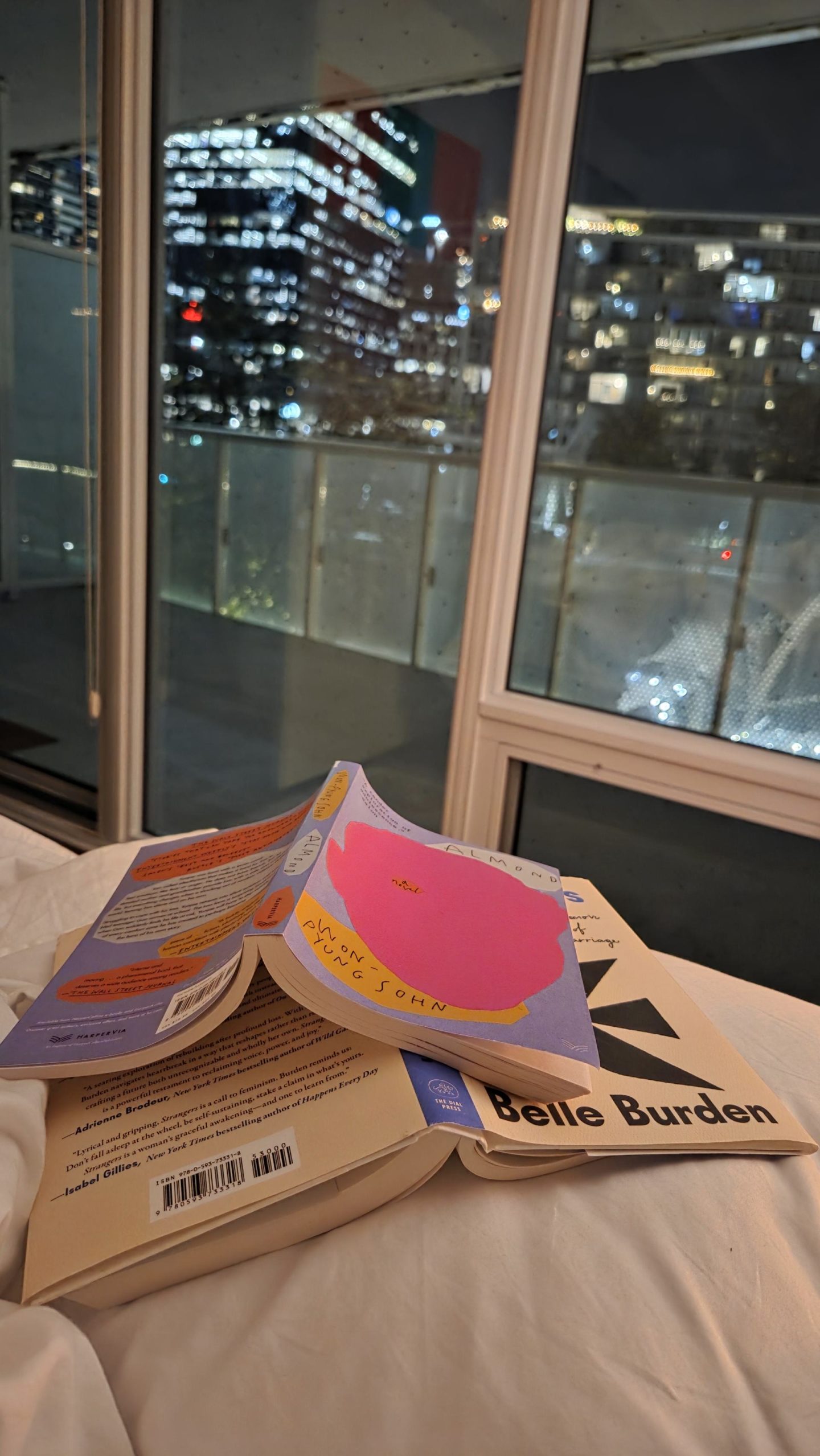
I finished both books within three days. They were so absorbing that I found myself soliloquising while reading, which I genuinely did not see coming. I had a full range of emotion, anger, empathy, joy, and real sadness. I was so in it that I kept forgetting it was fiction. It has been a long time since a book did that to me, and it may well be my return to reading novels and memoirs. I am thinking I will make it about ten percent of my reading diet, or treat it as something I come back to when I have genuinely earned it.
Almonds by Won-Pyung Sohn
I wanted to journal this in my diary but between my wobbly handwriting and just enough blood flowing to my fingers to actually get anything written, I figured I could keep it here in my online journal instead. Somehow my fingers have gotten so used to typing that writing long paragraphs by hand has become a task, something I used to do effortlessly. I have decided the way I am going to bring it back is by falling in love with a hopeless romantic and writing them letters every week. I think my handwriting will improve and I can re-engage my creative writing instincts. It sounds like a joke, but I could absolutely do it. I play too much.
"Almond" is the story of a boy named Yunjae who is unable to feel emotions like fear, anger, excitement or empathy due to a brain condition called alexithymia. The almond-shaped part of the brain called the amygdala prevents him from processing normal emotional responses, hence the title. This book offers a genuinely different take on empathy, and these are the moments that stayed with me long after I finished it.
The first thing I had to sit with was that Yunjae does not have emotions based on his condition, but I would argue that even people without any condition choose to look away from things that should naturally evoke empathy. There is a scene where a catastrophic incident plays on television and while Yunjae cannot feel anything, the person who walked in to meet was smiling when he saw him as an acknowledgement of his presence. Based on everything his mother had painstakingly taught him about emotional responses, he understood that this was wrong, that empathy was the appropriate response, even though he could not feel it himself. The line that stopped me was his mother's words "A tragedy that is too distant cannot be your tragedy." Which means, when it comes down to it, empathy is a choice.
The book also speaks to resilience and a sense of duty. Yunjae's journey shows how he navigated profound loss and trauma. Even without the traditional tools for emotional processing, he found a way to survive, manage his mother's bookstore and continue moving forward. This made me think that humans are actually wired for redundancy. He lacked the conventional mechanism for feeling, but his sense of duty carried him further than emotion alone might have. In fact, I would argue that if he had felt the full weight of everything, it might have paralysed him completely. Sometimes the thing we think we are missing is quietly protecting us.
There was also a line about how "there is no such person who cannot be saved only people who give up trying to save them". While that is true, self-preservation is still essential and key. Yunjae almost lost his life trying to save his friend Gon before Gon eventually turned a new leaf. Had he not survived the incident, Gon might have remained exactly the same or worse, and Yunjae would have been collateral damage in someone else's redemption story.
I believe deeply in trying to help. But true redemption and growth should never require the destruction of the person doing the helping. The line between profound empathy and dangerous self-destruction is one worth finding. Choose wisely.
There was also something that struck me about the passage on the ordinary path, the idea that the most normal seeming road is often the trickiest one to walk, and that people should have the freedom to define what normal actually means for them. Even though Yunjae was considered abnormal, was he really? Rationalise it outside of what the status quo demands and his life was actually rich with meaning and depth. What happens to standing out and being different? Wouldn't that be more interesting anyway?
The line about language was one of my favourites: "Maybe understanding a language was understanding the expressions and emotions of other people." Both literally and figuratively, this is where empathy becomes most relevant, and perspective is everything. Having learnt a new language in my adult life, I know firsthand that language is far more than vocabulary. To Yunjae, emotions were data points. If someone smiled, his mother taught him the correct response was to smile back or say something pleasant. He treated social interaction like a manual to be memorised. But when he met Gon, that manual failed completely. Gon speaks in the language of extremes, rage, violence, tears, cruelty which depends on his state at any given moment. In trying to understand Gon, Yunjae had to look past the literal meaning of his words and actions and start reading the figurative language underneath, that the anger was actually a cry for love and a fear of rejection. That the violence was the only language Gon knew for expressing something far more tender. This is precisely where empathy is born for Yunjae. He stops processing data points and starts understanding intent.
It reminded me of something from years ago, when I went for relationship counselling with a boyfriend and the therapist told him to listen to the intentions behind what I was upset about. Apparently I was not a great communicator at the time, I would stay completely silent and then, when I eventually said something, it was a long and accumulated list delivered in a way that felt cold and absolute if you were not paying attention to what was underneath it. I have since learned to state the problem and communicate what it made me feel, or what I actually needed. It has taken me a while to get here.
Through everything in that friendship, empathy became Yunjae and Gon's shared language. Yunjae learned to read the expressions and emotions of the world through his relationship with Gon, while Gon learned that he did not have to scream or fight to be understood. Their bond proves that real communication only happens when you are willing to shift your perspective enough to feel the emotional weight behind someone else's words.
The moment that made me cry was the butterfly scene. Gon, in one of his attempts to teach Yunjae about emotions, pulls off a butterfly's wings and pierces it with a needle. The plot twist is that it backfires completely. Yunjae feels nothing and politely asks him to stop. But Gon, who is overflowing with empathy, is visibly distressed by what he is doing. His hands are trembling. He is uncomfortable with his own cruelty, even in service of helping his friend. He later secretly returns to scrub the butterfly's remains off the floor.
This one I felt completely. Sometimes the people who appear the most guarded or detached are the deepest empaths, quietly carrying the weight of what they witness and cleaning up in private (sadly). I have been in multiple situations where I have set aside my own needs to help people who would have consumed everything I had to give. Thank God for discernment. It has done me wonders. The thing about genuinely kind people is that you simply do not know how to behave any other way.
Then, there is Dora and Yunjae's love story, which I enjoyed far more than I should admit. While Yunjae's mother tried to teach him emotions through words and rules, Dora teaches him through the physical world, the smell of a track after rain, the burning in her lungs, the feeling of her heart pounding mid-run. For someone whose brain struggles with abstract emotion, these tangible, sensory descriptions actually land. Through Dora, he begins to understand that feeling something is not just a mental puzzle. It is a physical experience.
Dora gave Yunjae a heart. Gon gave him the weight of loyalty. And it was that heart, built through love, that fuelled his refusal to give up on Gon when it mattered most. I was not prepared for the ending. I cried so much. It is safe to say this book put my empathy to the test and it won.
Strangers by Belle Burden
Strangers is a beautifully written memoir, and the only thing I will say about it is this "as much as a person's (man) mind can be desperately wicked, it thrives on the foolishness of women. This book was a reminder of what can go wrong and it does not matter how loving a relationship appears in the moment, or how certain you are that someone would always choose you. You must always choose yourself first, especially when it comes to your finances. Never give up your power.
I have seen and experienced endings so cold that I could not believe I had ever shared a life with people capable of them. I also remember someone once asking for my advice about their relationship and I told them, feel everything, love completely but please do not lose yourself in it. That has always been true for me. The only reason I still have love to give is because I never lost myself in any of those painful experiences.
I was so angry turning every page that I had to return the book when I was done. Keeping it on my shelf would have unsettled me, and I did not want to start building a generalised wall as a defence mechanism. I refused to give it that power.
